The Human CD69 Monoclonal Antibody (PE Conjugated) (FN50) is a powerful tool for researchers studying CD69, a cell surface protein involved in immune activation and inflammation. This monoclonal antibody, designated AGEL1688, is specifically designed for use with human samples and is conjugated to phycoerythrin (PE) for easy detection in flow cytometry applications.CD69 is a key marker of early immune activation, playing a role in the activation and proliferation of various immune cells. The FN50 monoclonal antibody recognizes and binds to CD69, allowing researchers to track its expression and analyze its function in different cell types.
This makes it an invaluable tool for investigations in immunology, infection, and autoimmune diseases.By targeting CD69, researchers can delve into its role in immune responses, inflammation, and immune cell signaling pathways. This antibody opens up possibilities for understanding the mechanisms underlying immune activation and the dynamics of immune cell interactions. It is a crucial reagent for unraveling the complexities of immune regulation and holds promise for studies in immunotherapy, infectious diseases, and autoimmune conditions.
Product Title:
PE Anti-Human CD69 Antibody [FN50]
SKU:
AGEL1688
Size:
20 Tests, 100 Tests, 200 Tests
Clone No:
FN50
Synonyms:
Early activation antigen CD69;Activation inducer molecule;AIM;EA1;MLR-3;
Host Species:
Mouse
Reactivity:
Human
Application:
FCM
Isotype:
Mouse IgG1, κ
Isotype Control:
PE Mouse IgG1, κ Isotype Control[MOPC-21]
Form:
Liquid
Conjugation:
PE
Recommended Use:
Each lot of this antibody is quality control tested by flow cytometric analysis. The amount of the reagent is suggested to be used 5 µL of antibody per test (million cells in 100 µL staining volume or per 100 µL of whole blood). Please check your vial before the experiment. Since applications vary, the appropriate dilutions must be determined for individual use.
Spectrum:
Swissprot:
Q07108
Gene ID:
969
Storage Buffer:
Phosphate buffered solution, pH 7.2, containing 0.09% stabilizer and 1% protein protectant.
Stability & Storage:
Keep as concentrated solution. Store at 2~8°C and protected from prolonged exposure to light. Do not freeze. Centrifuge before opening to ensure complete recovery of vial contents. This product is guaranteed up to one year from purchase.
Background:
CD69 is a 27-33 kD type II transmembrane protein also known as activation inducer molecule (AIM), very early activation antigen (VEA), and MLR3. It is a member of the C-type lectin family, expressed as a disulfide-linked homodimer. Other members of this receptor family include NKG2, NKR-P1 CD94, and Ly49. CD69 is transiently expressed on activated leukocytes including T cells, thymocytes, B cells, NK cells, neutrophils, and eosinophils. CD69 is constitutively expressed by a subset of medullary mature thymocytes, platelets, mantle B cells, and certain CD4+ T cells in germinal centers of normal lymph nodes. CD69 is involved in early events of lymphocyte, monocyte, and platelet activation, and has a functional role in redirected lysis mediated by activated NK cells.

![PE Anti-Human CD69 Antibody [FN50] (AGEL1688)](https://cdn11.bigcommerce.com/s-h68l9z2lnx/images/stencil/1280x1280/products/237555/618080/pe-anti-human-cd69-antibody-fn50-agel1688__32397.1732237789.jpg?c=2?imbypass=on "PE Anti-Human CD69 Antibody [FN50] (AGEL1688)")
![PE Anti-Human CD69 Antibody [FN50] (AGEL1688)](https://cdn11.bigcommerce.com/s-h68l9z2lnx/images/stencil/1280x1280/products/237555/756022/pe-anti-human-cd69-antibody-fn50-agel1688__03785.1785068725.jpg?c=2?imbypass=on "PE Anti-Human CD69 Antibody [FN50] (AGEL1688)")
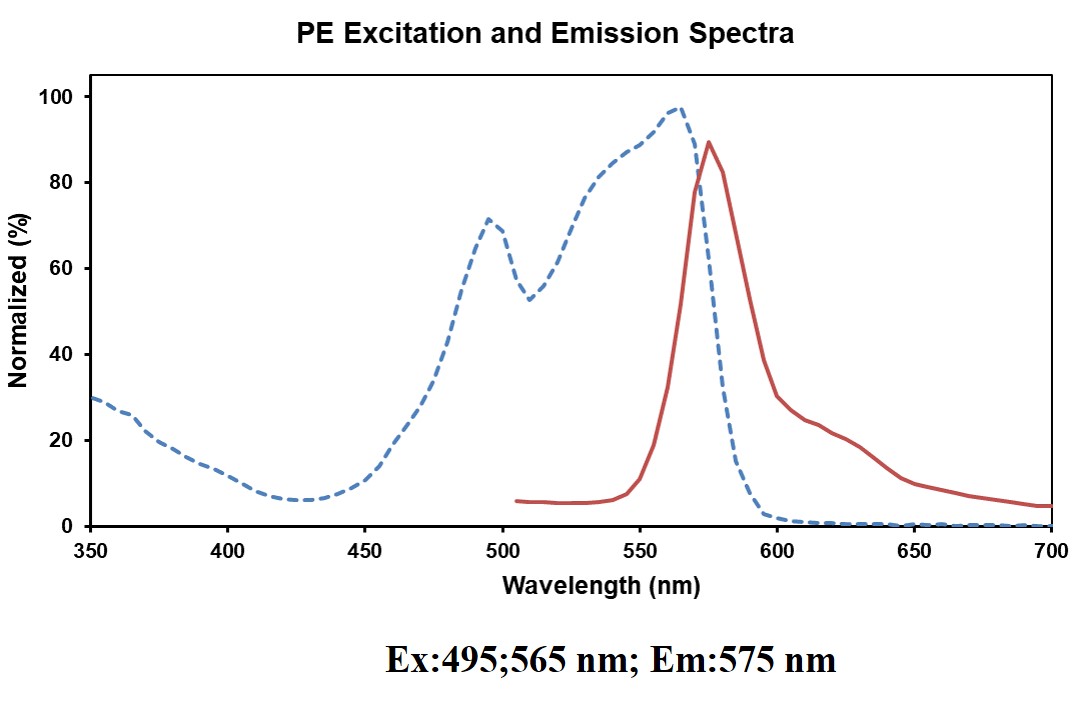
![PE Anti-Human CD69 Antibody [FN50] (AGEL1688)](https://cdn11.bigcommerce.com/s-h68l9z2lnx/images/stencil/608x608/products/237555/618080/pe-anti-human-cd69-antibody-fn50-agel1688__32397.1732237789.jpg?c=2 "PE Anti-Human CD69 Antibody [FN50] (AGEL1688)")
![PE/Cyanine5.5 Anti-Human CD69 Antibody [FN50] (AGEL1692)](https://cdn11.bigcommerce.com/s-h68l9z2lnx/images/stencil/590x590/products/22223/605881/pecyanine5.5-anti-human-cd69-antibody-fn50-agel1692__64451.1707496267.jpg?c=2 "PE/Cyanine5.5 Anti-Human CD69 Antibody [FN50] (AGEL1692)")
![PE/Cyanine5.5 Anti-Human CD69 Antibody [FN50] (AGEL1692)](https://cdn11.bigcommerce.com/s-h68l9z2lnx/images/stencil/590x590/products/22223/776274/pecyanine5.5-anti-human-cd69-antibody-fn50-agel1692__26114.1785559175.jpg?c=2 "PE/Cyanine5.5 Anti-Human CD69 Antibody [FN50] (AGEL1692)")
![PE/Cyanine5 Anti-Human CD69 Antibody [FN50] (AGEL1690)](https://cdn11.bigcommerce.com/s-h68l9z2lnx/images/stencil/590x590/products/22221/606194/pecyanine5-anti-human-cd69-antibody-fn50-agel1690__66495.1707497234.jpg?c=2 "PE/Cyanine5 Anti-Human CD69 Antibody [FN50] (AGEL1690)")
![PE/Cyanine5 Anti-Human CD69 Antibody [FN50] (AGEL1690)](https://cdn11.bigcommerce.com/s-h68l9z2lnx/images/stencil/590x590/products/22221/776092/pecyanine5-anti-human-cd69-antibody-fn50-agel1690__48558.1785558670.jpg?c=2 "PE/Cyanine5 Anti-Human CD69 Antibody [FN50] (AGEL1690)")
![PE/Cyanine7 Anti-Human CD69 Antibody [FN50] (AGEL1691)](https://cdn11.bigcommerce.com/s-h68l9z2lnx/images/stencil/590x590/products/237556/618163/pecyanine7-anti-human-cd69-antibody-fn50-agel1691__54462.1732238123.jpg?c=2 "PE/Cyanine7 Anti-Human CD69 Antibody [FN50] (AGEL1691)")
![PE/Cyanine7 Anti-Human CD69 Antibody [FN50] (AGEL1691)](https://cdn11.bigcommerce.com/s-h68l9z2lnx/images/stencil/590x590/products/237556/753828/pecyanine7-anti-human-cd69-antibody-fn50-agel1691__00246.1785061773.jpg?c=2 "PE/Cyanine7 Anti-Human CD69 Antibody [FN50] (AGEL1691)")
![APC Anti-Human CD69 Antibody [FN50] (AGEL1689)](https://cdn11.bigcommerce.com/s-h68l9z2lnx/images/stencil/590x590/products/22220/605827/apc-anti-human-cd69-antibody-fn50-agel1689__91300.1707496128.jpg?c=2 "APC Anti-Human CD69 Antibody [FN50] (AGEL1689)")
![APC Anti-Human CD69 Antibody [FN50] (AGEL1689)](https://cdn11.bigcommerce.com/s-h68l9z2lnx/images/stencil/590x590/products/22220/777744/apc-anti-human-cd69-antibody-fn50-agel1689__38028.1785563844.jpg?c=2 "APC Anti-Human CD69 Antibody [FN50] (AGEL1689)")
![FITC Anti-Human CD69 Antibody [FN50] (AGEL1687)](https://cdn11.bigcommerce.com/s-h68l9z2lnx/images/stencil/590x590/products/22218/606334/fitc-anti-human-cd69-antibody-fn50-agel1687__77819.1707497703.jpg?c=2 "FITC Anti-Human CD69 Antibody [FN50] (AGEL1687)")
![FITC Anti-Human CD69 Antibody [FN50] (AGEL1687)](https://cdn11.bigcommerce.com/s-h68l9z2lnx/images/stencil/590x590/products/22218/766790/fitc-anti-human-cd69-antibody-fn50-agel1687__52525.1785529271.jpg?c=2 "FITC Anti-Human CD69 Antibody [FN50] (AGEL1687)")